Better Audiobook Apps Than Audible: 7 Better Options Depending on Your Needs
Audible is one of the largest and most comprehensive audiobook apps available today.
But largest doesn’t mean best for everyone.
Some people don’t want to pay a monthly subscription.
Some people already use Spotify and don’t want another audio app.
Some people just want to borrow audiobooks for free.
Some people want to combine ebooks and audiobooks.
And some people don’t actually want to listen to a 10-hour book — they want to quickly learn key ideas, review knowledge, and retain it longer.
So, if you’re looking for better audiobook apps than Audible, the more helpful way isn’t to ask:
Which app is better than Audible in every way?
But rather:
Which app is better than Audible for the specific way I listen to books?
In this article, we’ll look at 7 options:
- Spotify
- Libby
- Apple Books
- Kobo
- Everand
- Traudio
- And cases where Audible is still the better choice
Quick Summary: When is Another App Better Than Audible?
| If you want… | A more suitable option than Audible |
|---|---|
| Music + podcast + audiobook in one app | Spotify |
| Free audiobooks from the library | Libby |
| No subscription, buy individual titles | Apple Books |
| Ebook + audiobook in the same ecosystem | Kobo |
| Reading and listening subscription | Everand |
| Quick learning from non-fiction books | Traudio |
| New releases + ownership via credits | Audible is still strongest |
This is the most important approach of the article:
No single app beats Audible on all criteria.
But many apps can beat Audible on one specific criterion.
Where is Audible Strong Before Looking for Alternatives?
To find an app better than Audible, you first need to understand what Audible is truly optimized for.
Audible currently offers multiple membership tiers. The Premium plan provides recurring credits to purchase audiobooks, while the included catalog allows streaming of thousands of audiobooks, podcasts, and Audible Originals. Audiobooks purchased with credits or money remain in your library even if your membership ends.
This is a very strong proposition:
Subscription access
+
Credits
+
Permanent ownership
Audible is particularly suitable for:
- Bestsellers
- New releases
- Fiction
- Long-form non-fiction
- Celebrity narration
- Audible Originals
- People who want to build a long-term audiobook library
Therefore, another app is only “better than Audible” when your needs differ from this core use case.
Chart 1: Where Audible Alternatives Are Strong
The chart below is an editorial assessment by use case, not market share data.
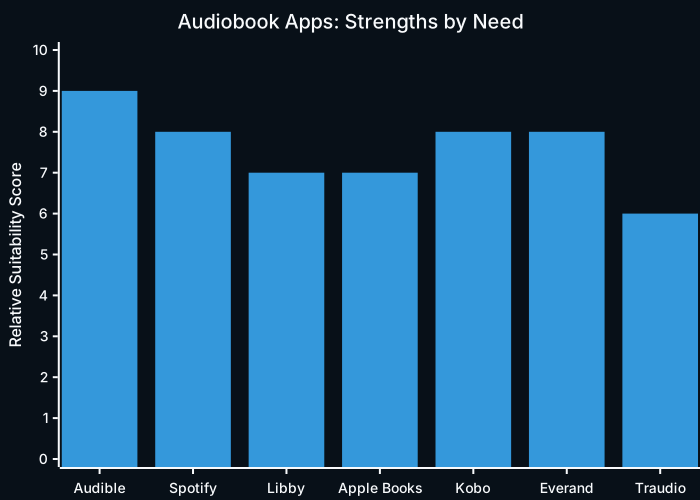
The aggregated numbers above do not imply “which app is absolutely the best.”
The section below is the important part: where each app wins.
1. Spotify is Better Than Audible if You Want All Your Audio in One App
Spotify has an advantage that Audible finds hard to replicate:
You likely already use Spotify every day.
Music, podcasts, and audiobooks coexist in one ecosystem.
In the US, some Premium plans currently include 15 hours of audiobook listening per month from a catalog of over 700,000 titles. Spotify also offers Audiobooks+ and top-ups for those who need more listening hours.
When is Spotify Better Than Audible?
If you:
- Already pay for Spotify Premium
- Don’t listen to audiobooks excessively
- Don’t want an additional subscription
- Like discovery algorithms
- Want to switch between music, podcasts, and books
Spotify can create less friction.
Audible
Music app
+
Podcast app
+
Audible
Spotify
Music
+
Podcast
+
Audiobook
=
1 app
For casual listeners, simplicity can be more important than catalog specialization.
But the 15-hour limit is notable
A long audiobook:
10 hours
is fine.
Two long audiobooks:
10 hours + 10 hours
=
20 hours
You’ve exceeded the standard allowance.
Spotify allows purchasing additional hours or using Audiobooks+, but this diminishes some of the “already included in Premium” advantage.
Spotify is better than Audible for:
Casual audiobook listeners
Audible is better than Spotify for:
Heavy audiobook listeners
2. Libby is Better Than Audible if You Want Free Audiobooks
Libby is one of the most interesting Audible alternatives because it’s not really a subscription competitor.
Libby connects you to the public library system.
If your library participates in OverDrive, your library card can allow you to borrow:
- Audiobooks
- Ebooks
- Magazines
without paying directly to Libby.
This is the model:
Library card
↓
Borrow
↓
Listen
↓
Return automatically
instead of:
Monthly payment
↓
Credits
↓
Buy
Where is Libby Better Than Audible?
Very simply:
Price.
If the library’s catalog meets your needs, the cost of audiobooks can be zero.
For listeners of:
- Backlist titles
- Classics
- Popular fiction
- Non-fiction
- Audiobooks not needed immediately
Libby can be an extremely good option.
But free comes with another cost: waiting
Libby depends on the number of licenses the library has purchased.
That means a bestseller might have:
5 copies
87 people waiting
You have to place a hold and wait.
This is a completely different trade-off from Audible:
Audible
Pay
↓
Listen immediately
Libby
Free
↓
May have to wait
If you prioritize free > instant access, Libby can be better than Audible.
If you want new releases immediately, Audible is usually more convenient.
3. Apple Books is Better Than Audible if You Hate Subscriptions
Not everyone needs a membership.
If you only listen to:
3 audiobooks/year
a subscription might not make sense.
Apple Books does not require a monthly subscription. Users can purchase individual audiobooks or ebooks, and Apple also offers thousands of free titles.
This is an extremely simple model
Find book
↓
Buy
↓
Own
↓
Listen
No need for:
- Credit rollover
- Included catalog
- Monthly quota
- Membership tiers
- Listening hours
Apple Books is particularly suitable for
- iPhone/iPad/Mac users
- People who only buy a few books per year
- People who don’t want a subscription
- People who want Family Sharing
- People who prefer the Apple ecosystem
Apple allows sharing eligible books with up to five other members in Family Sharing.
Apple Books vs Audible
Audible is better if
You listen to a lot of books.
Apple Books is better if
You want:
Pay only when I want a book
instead of:
Pay every month because I might want a book
This is a very significant psychological difference.
4. Kobo is Better Than Audible if You Want Ebooks and Audiobooks Equally
Kobo is not just an audiobook app.
It’s an ecosystem for:
- Ebooks
- Audiobooks
- Kobo eReaders
- Kobo Plus
In the US, Kobo Plus currently offers an ebook + audiobook plan at $9.99/month, along with ebook-only or audiobook-only plans.
Kobo has an advantage for hybrid readers
Some people are not:
audiobook listeners
or:
ebook readers
They are both.
The workflow might be:
Morning
Ebook

↓

Commute
Audiobook

↓

Evening
Ebook
Kobo has a natural ecosystem logic for this group.
Kobo is Better Than Audible When
You:
- Use a Kobo eReader
- Read ebooks as much as audiobooks
- Want a subscription that combines both formats
- Don’t want the Amazon ecosystem
Audible is still stronger with its dedicated audiobook experience and ownership-by-credit.
But Kobo might be more suitable for format-agnostic individuals.
5. Everand is Better Than Audible if You Want a Reading + Listening Subscription
Everand approaches the market more as a “reading subscription” than an audiobook store.
The platform currently offers audiobooks and ebooks within the same subscription, with plans featuring different numbers of unlocks. Everand advertises a library of over 1.5 million books across its current plans.
Everand Differs from Audible in Mindset
Audible makes you think:
Which audiobook do I want to own?
Everand makes you think:
What do I want to read or listen to next within my subscription?
Audible
Choose
↓
Credit
↓
Own
Everand
Subscribe
↓
Explore
↓
Read / Listen
↓
Move on
Everand is more suitable for the explorer.
Audible is more suitable for the collector.
6. Traudio is Better Than Audible if the Goal Isn’t to Finish Books but to Learn from Them
This is the most distinct case on the list.
Traudio is not an Audible clone.
Nor does it try to compete with:
- Fiction catalogs
- Full-length bestsellers
- Celebrity narrators
- Audible Originals
Traudio takes a learning-first audio approach.
The platform currently advertises over 2,000 book summaries and focuses on areas such as:
- Finance
- Investing
- Business
- Productivity
- Psychology
- Leadership
- Self-improvement
Each summary is designed around short learning sessions, typically around 15 minutes.
Audible and Traudio are Actually Optimized for Two Different Metrics
Audible
Implicit metric:
Hours listened
Books completed
Traudio
A more appropriate metric is:
Ideas understood
Concepts recalled
Actions applied
That’s why Traudio includes tools not common in traditional audiobook players:
- Synchronized audio + text
- Interactive quizzes
- Flashcards
- Bookmarks
- StickWise AI
- Guided Learning
- 7-day plans
Chart 2: Full Audiobook vs. Learning-First Audio
The chart below illustrates product focus, not a quality score.
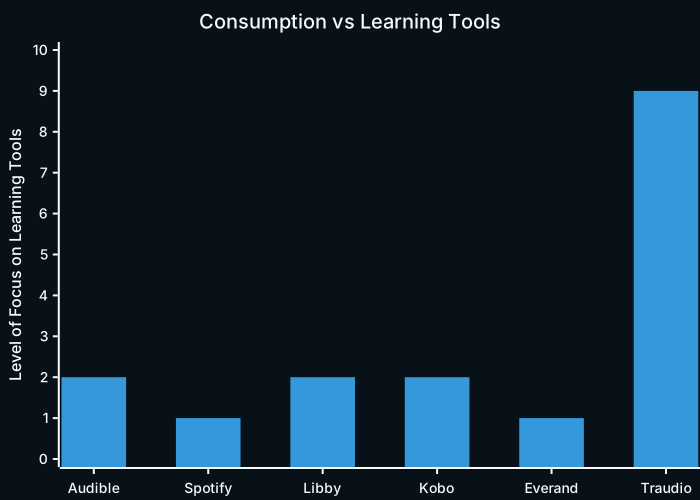
Audible isn’t “losing” due to a low score here.
It simply isn’t designed as a learning app.
When Can Traudio Be Better Than Audible?
If your question is:
I want to understand the important ideas from 5 books this month.
Traudio might be more suitable.
If the question is:
I want to enjoy the entirety of Project Hail Mary or a 20-hour novel.
Audible is much more suitable.
Time Cost is the Biggest Difference
Assume a 10-hour non-fiction audiobook.
Audible route
10 hours
=
600 minutes
If you listen:
30 minutes/day
you need:
20 days
to complete.
Traudio route
A summary is about:
15 minutes
You can engage with the core ideas of many more books in the same amount of time.
Chart 3: Time commitment example
This is a hypothetical illustration, not a claim that every audiobook or every summary has these exact durations.
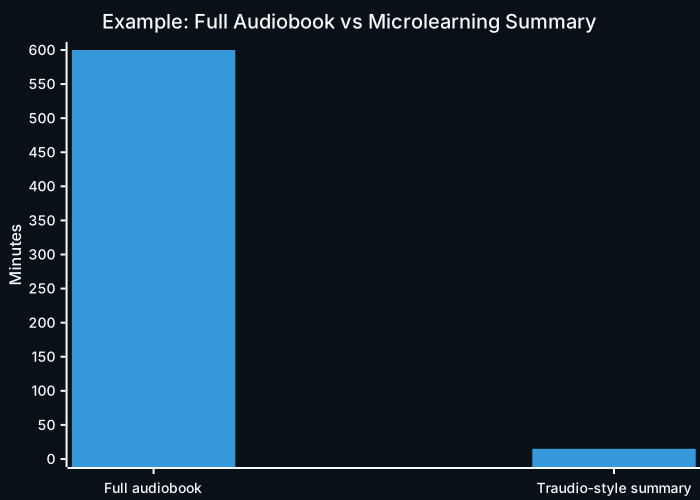
But note:
15 minutes cannot contain 600 minutes of nuance.
You are trading:
Depth
for:
Speed
This is a trade-off, not magic.
How is Traudio’s free tier different from Audible’s?
Traudio currently allows free users to listen to selected book titles with a daily AI chat limit. VIP expands to unlimited audiobook summaries, unlimited AI, offline downloads, and car integration.
The website also has a free audiobook summary library on finance, productivity, and personal growth.
This makes Traudio suitable for:
Try topic
↓
Learn core ideas
↓
Decide whether to go deeper
Then, if a book is truly important, users can still switch to Audible, Libby, or Kobo to listen to the full-length version.
Traudio and Audible can even complement each other
A quite logical workflow:
Traudio
↓
15-minute overview
↓
Is this book worth a deep dive?
↓
YES
↓
Audible
↓
Full audiobook
In this model:
Traudio = discovery + learning filter
Audible = deep dive
This can be more effective than buying or listening to dozens of hours of books that you don’t yet know if they’re suitable.
Chart 4: Choose an Audible alternative based on your problem

This is probably the most realistic decision tree in the article.
Ownership comparison: not all apps sell the same thing
A common mistake is only comparing monthly prices.
But audiobook apps can sell three completely different types of value.
Ownership
You buy a book and keep it.
Examples:
- Audible credit purchases
- Apple Books
- Kobo purchases
Access
You pay to access a catalog.
Examples:
- Spotify listening allowance
- Everand
- Kobo Plus
Borrowing
You borrow temporarily.
Example:
- Libby
Learning access
You pay for a system that helps you acquire knowledge.
Example:
- Traudio
Chart 5: Ownership vs access
                    OWNERSHIP
                        ↑
                        │
        Apple Books     │     Audible
                        │
              Kobo      │
                        │
────────────────────────┼────────────────────→ ACCESS
                        │
            Libby       │     Everand
                        │
                        │     Spotify
                        │
                        │     Traudio
                        ↓
                 TEMPORARY ACCESS
This explains why just asking:
Which app is cheaper?
is not enough.
You have to ask:
After I stop paying, what remains?
Better audiobook app than Audible for fiction?
In most cases:
not many apps are clearly better than Audible.
Audible remains particularly strong with:
- Fiction
- New releases
- Celebrity narration
- Full-cast productions
- Originals
- Ownership
Spotify and Libby are good alternatives if convenience or price are more important.
But if you are a heavy fiction listener, Audible is still a very strong benchmark.
Better audiobook app than Audible for non-fiction?
This is where the answer is more diverse.
Want the whole book
- Audible
- Spotify
- Libby
- Kobo
- Apple Books
- Everand
Want key ideas fast
- Traudio
Want both ebooks and audiobooks
- Kobo
- Everand
Want it for free
- Libby
Better than Audible if you only listen to one book every few months?
Likely Apple Books.
Why pay a monthly subscription if your actual behavior is:
Month 1: 0 books
Month 2: 0 books
Month 3: 1 book
Month 4: 0 books
You can buy exactly the audiobook you need.
A subscription only saves money if you actually use it enough.
Better than Audible if you listen a lot?
Conversely, if you listen:
40+ hours/month
Spotify with its hourly allowance might become less appealing.
Audible, Kobo Plus, Everand, or a combination of Audible + Libby might be more reasonable depending on the catalog and how you want to own books.
Better than Audible if your budget is 0?
Libby is the strongest answer if you have a suitable library card.
Traudio is also useful if your needs focus on free book summaries and learning rather than full audiobooks.
Better than Audible if you learn while driving or doing housework?
The answer depends on the goal.
Want entertainment or a story
- Audible
- Spotify
- Libby
Want learning
- Traudio
Audio microlearning has an advantage:
You can turn times that are difficult for reading into:
Driving
+
Walking
+
Cooking
+
Cleaning
=
Learning time
Traudio currently supports car listening in its premium features and builds its product around learning on the go.
Don’t leave Audible just to try a new app
If you already have:
- A large library
- Credits
- Favorite narrators
- A new release habit
- The Amazon ecosystem
switching apps just because a competitor is a few dollars cheaper might not be worth it.
Switching cost is also a cost.
Including:
- Library fragmentation
- Recommendation history
- Playback history
- Bookmarks
- Wishlist
- Habit
An app that’s better on paper isn’t necessarily better in real life.
An audiobook stack can be better than one audiobook app
You don’t necessarily have to choose just one app.
For example:
Budget stack
Libby
+
Apple Books
Use Libby for free.
Buy Apple Books when you don’t want to wait.
Heavy listener stack
Audible
+
Libby
Audible for new releases and ownership.
Libby for free backlist.
Entertainment stack
Spotify
+
Libby
Spotify for your daily audio ecosystem.
Libby for supplementary audiobooks.
Learning stack
Traudio
+
Audible / Libby
Traudio:
Learn fast
Then:
Deep dive only when worth it
Chart 6: Audiobook stack by goal

This might be a more realistic perspective than “winner takes all.”
So which app is actually better than Audible?
Spotify
Better if: you already use Spotify Premium and only listen to audiobooks moderately.
Not better if: you listen many hours each month.
Libby
Better if: free is a priority.
Not better if: you hate waitlists.
Apple Books
Better if: you don’t want a subscription.
Not better if: you listen to many books.
Kobo
Better if: you want an ebook + audiobook ecosystem.
Not better if: audiobooks are the only format you care about.
Everand
Better if: you want a subscription for both reading and listening.
Not better if: you want to own audiobooks long-term.
Traudio
Better if: audiobooks are primarily a means for you to learn non-fiction quickly and remember it longer.
Not better if: you want to listen to full-length fiction or entire original works.
Conclusion
If you’re looking for better audiobook apps than Audible, don’t start with the question:
Which app has a larger catalog?
Start with:
What is Audible doing that I don’t actually need?
If the answer is:
I don’t want to pay a subscription, Apple Books might be a better fit.
I want free audiobooks, Libby should be one of the first places to try.
I already live in Spotify, integrated audiobooks in Premium might be enough, with a catalog of over 700,000 titles and listening allowance in supported markets.
I read ebooks as much as I listen to audiobooks, Kobo or Everand offer a more balanced ecosystem.
And if the answer is:
I don’t need to listen to a non-fiction book for 10 hours. I want to understand the important ideas, review knowledge, and continue learning.
then Traudio represents a completely different direction from Audible: about 15 minutes for core ideas, combining audio and text, then continuing with quizzes, flashcards, guided learning, and StickWise AI.
Perhaps the most accurate way to conclude is:
Audible
=
Listen to the whole book

Spotify
=
Listen where you already listen

Libby
=
Listen for free

Apple Books
=
Buy only what you want

Kobo / Everand
=
Read and listen in one ecosystem

Traudio
=
Learn from books faster
Not every app is better than Audible.
But it’s very likely there’s an app better than Audible for you.
Related Articles
Master Your Financial Mindset Today
Download the Traudio app for iOS & Android to listen to synchronized audiobook summaries and chat with StickWise AI.
Download Traudio App Free